How much does it cost to create a mold?
The cost to create a mold depends on the mold type, part size, complexity, surface finish requirements, framing needs, and whether pattern development or modifications are required. Custom tooling for rotational molding is typically priced based on engineering time, casting or fabrication requirements, machining, and finishing. A detailed review of your drawings or files helps define the most accurate scope and cost.
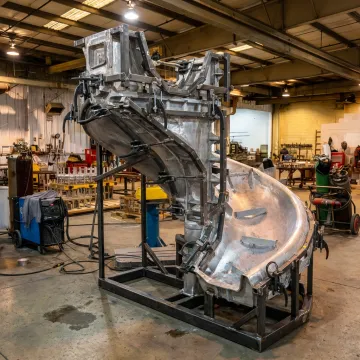
In the context of rotational molding tooling, a master mold refers to the primary production tooling used to shape finished parts. At Rotocast Technologies, custom molds are engineered from customer-supplied drawings or CAD files, developed through foundry pattern work or CNC machining, and finished to meet specific surface and performance requirements. The result is production-ready tooling built for durability, consistent output, and long service life.
What types of molds does Rotocast Technologies design?
Rotocast Technologies supports several tooling solutions for rotational molding, including cast aluminum molds, fabricated molds, CNC molds, foundry patterns, and related framing systems. The team also provides finishing options, coatings, and repair services. This range allows manufacturers to choose tooling based on production goals, part geometry, durability requirements, and desired surface finish.
Why are cast aluminum molds commonly used for rotational molding?
Cast aluminum molds are widely used in rotational molding because they offer strong surface quality, efficient heat transfer, and durable long-term performance. Thin-walled aluminum castings can help support consistent resin heating and cooling, which contributes to part quality and cycle efficiency. When properly engineered and finished, they also provide the detailed surfaces manufacturers need for repeatable production.
Can existing molds be repaired or modified?
Yes. Existing molds can often be repaired, rebuilt, or modified to restore performance or adapt tooling to updated production needs. This may include machine shop work, replacement components, surface refinishing, or structural adjustments. Repair and modification services can extend mold life, reduce downtime, and help manufacturers avoid the cost of replacing tooling that still has a usable foundation.
What finishing options are available for custom molds?
Available finishing options can include hand polishing, sandblasted or shot peened textures, acid etching, polished surfaces ranging from light sanding to mirror polish, and specialty coatings such as Teflon. Finishing affects both mold performance and the appearance of the molded part, so the right finish is selected based on release needs, surface expectations, and production conditions.
Does Rotocast Technologies work from customer drawings or CAD files?
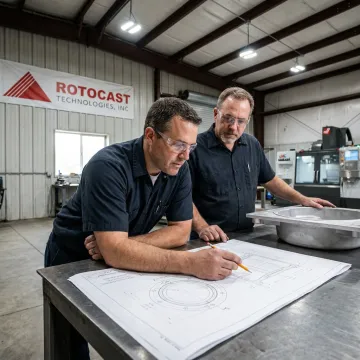
Yes. Projects can begin with customer-supplied electronic files or drawings. From there, the engineering and pattern shop teams develop efficient, productive mold designs tailored to the application. Design validation helps confirm performance, while tooling details such as wall thickness, parting line layout, and shutoff features are addressed before production to support reliable molding results.
How long has Rotocast Technologies been providing custom mold design services?
Rotocast Technologies has served the rotational molding market since 1956, giving the company nearly 70 years of experience in mold manufacturing. The company evolved from its heritage in aluminum tire mold production into a specialized mold maker with deep foundry and tooling expertise. Today, the team combines engineering competence, proprietary foundry processes, veteran pattern makers, and skilled finishing and machine shop support to deliver dependable custom mold solutions.