PTFE is one of the most widely used synthetic coatings on earth, yet genuine confusion surrounds its safety. The PFAS conversation has tangled consumers in knots: if PTFE is technically a PFAS, does that make a non-stick pan dangerous? The short answer is no — but the longer answer requires separating the finished polymer from its manufacturing chemistry.
This article covers what PTFE actually is, why it doesn't stick, where the real safety limits are, and how it performs across industrial and consumer applications — including rotational molding, where mold surface quality and coating chemistry intersect directly.
Key Takeaways
- PTFE (polytetrafluoroethylene) is the polymer behind the Teflon brand — stable, chemically inert, and one of the lowest-friction solids known
- PFOA, the manufacturing chemical once linked to health concerns, was phased out of production by 2013; PTFE itself is not the problem
- Overheating above 260°C/500°F releases decomposition fumes that cause flu-like symptoms in humans and can be fatal to pet birds
- Industrial uses include wire insulation, aerospace components, medical devices, and rotational mold release coatings
- Ceramic alternatives exist but consistently lose non-stick performance faster than PTFE under real-world conditions
What Is PTFE Coating and How Does It Work?
Discovery and Brand Ownership
Roy J. Plunkett accidentally discovered PTFE at DuPont's Jackson Laboratory on April 6, 1938, while researching refrigerants. DuPont commercialized it under the Teflon brand in the 1940s. When DuPont completed its spin-off of The Chemours Company on July 1, 2015, the Teflon trademark transferred with it. Chemours now identifies Teflon as its most recognized brand.
The key distinction: Teflon is a brand name, not a separate chemistry. All Teflon is PTFE, but PTFE is sold under dozens of other trade names. When you see "PTFE coating" on industrial specs and "Teflon coating" on cookware packaging, they're describing the same polymer class.
Chemical Structure and Properties
PTFE's formula is (C₂F₄)ₙ — a long carbon backbone with two fluorine atoms bonded to each carbon. Carbon-fluorine bonds are among the strongest in organic chemistry at 439 kJ/mol, which is why PTFE is so chemically inert.
Key material properties:
- Melting point: ~327°C (620°F)
- Continuous service limit: 260°C (500°F) per Chemours specifications
- Chemical resistance: Impervious to nearly all industrial solvents, acids, and bases
- Electrical insulation: Excellent dielectric properties across a wide frequency range
PTFE vs. PFAS — The Distinction That Matters
PTFE is technically classified within the PFAS (per- and polyfluoroalkyl substances) family because it contains fully fluorinated carbon atoms, and that classification is the source of most public confusion.
"PFAS" covers thousands of chemicals with vastly different risk profiles. The key differences between PTFE and the compounds under regulatory scrutiny:
- PTFE is a high-molecular-weight solid polymer — it doesn't dissolve, doesn't migrate through tissue, and doesn't bioaccumulate
- PFOA, PFOS, and GenX are small, mobile molecules that move through water and persist in biological systems
- PFOA was used as a processing aid during PTFE manufacturing, not as an ingredient in the finished coating
Following EPA action, the 2010/2015 PFOA Stewardship Program targeted full elimination by 2015. Chemours states it no longer makes or uses PFOA in production.
The Science Behind PTFE's Non-Stick Properties
Why Nothing Sticks
PTFE's non-stick behavior comes from two measurable properties working together:
Low surface energy: Accu Dyne test data show PTFE surface tension clustering at 18–20 mN/m — among the lowest of any solid material. At that level, liquids and food substances simply lack the energy to form adhesive bonds with the surface.
Low friction: Chemours data show PTFE dynamic friction coefficient at 0.05–0.10 against polished steel (static friction values are higher, around 0.12–0.15 depending on test conditions). These values shift by test method, so citing a single universal number overstates precision — the consistent takeaway is that PTFE is exceptionally slippery by any measure.
The fluorine atoms surrounding the carbon chain form a dense, uniform electron cloud that other molecules can't grab onto. Water beads and rolls off. Food proteins can't form the surface bonds needed to stick. Adhesive substances that would cling to bare metal simply slide away.
What "Non-Stick" Means in Practice
Food adheres to surfaces through two mechanisms: mechanical grip (locking into surface texture) and chemical bonding. PTFE disrupts both — its smoothness eliminates surface grip, and its chemical inertness prevents bonding.
This works best at low to medium heat. PTFE performs optimally below 260°C; above that, coating integrity begins to degrade. High-temperature searing largely defeats the non-stick benefit anyway, since it requires surface contact and reaction , which is why cast iron remains the professional choice for crust development.
PTFE vs. Ceramic Cookware
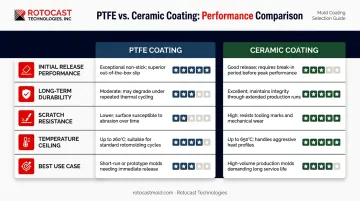
Durability under regular use is where the two coatings diverge most. America's Test Kitchen's 2024 ceramic skillet review used a 50-egg dry-fry durability test, and many ceramic pans showed significant release degradation before completing it. Consumer Reports reported in 2025 no noticeable initial performance difference between PTFE and ceramic coatings — but long-term retention favors PTFE.
Head-to-head, the two coatings compare like this:
- Initial release performance: Comparable between PTFE and ceramic
- Long-term durability: PTFE retains release properties significantly longer under regular use
- Scratch resistance: PTFE outperforms ceramic, which degrades faster with utensil contact
- Temperature ceiling: Ceramic tolerates slightly higher surface temperatures before breakdown
- Best use case: PTFE for frequent cooking; ceramic for occasional high-heat applications
Is PTFE Coating Safe? What the Research Shows
The Temperature Boundary
PTFE is stable and non-reactive at normal cooking temperatures. The safety picture changes above the following thresholds:
| Temperature | What Happens |
|---|---|
| Below 260°C (500°F) | Safe continuous use per Chemours |
| 260–316°C (500–600°F) | Intermittent use limit; caution advised |
| 350–400°C (662–752°F) | Fluorocarbon pyrolysis illness risk, per PubMed review |
| Above 400°C (752°F) | Significant decomposition; toxic gas release |
Most cooking oils hit their smoke point well below 260°C — that visible smoke is your warning before reaching dangerous territory. The main risk is leaving an empty PTFE pan unattended on high heat.
Polymer fume fever symptoms — fever, chills, dry cough, chest tightness, headache — typically appear several hours after overheating exposure and resolve within 12–48 hours.
The Bird Risk
Pet birds are far more vulnerable than humans. The Merck Veterinary Manual documents that PTFE fumes from overheated pans at temperatures reaching 280°C/536°F can cause death in birds within minutes. Avian respiratory systems are far more sensitive to airborne particles than mammalian systems.
If you have pet birds: don't use PTFE-coated cookware without strong kitchen ventilation, or switch to alternatives entirely.
PFOA, Cancer, and the Current Risk Assessment
PFOA (a manufacturing chemical, not a PTFE ingredient) was detected in 99.7% of serum samples in NHANES 2003–2004 data from 2,094 Americans — reflecting decades of widespread industrial exposure.
The C8 Science Panel's 2012 evaluation found probable links between PFOA exposure and kidney and testicular cancer specifically. IARC classified PFOA as Group 1 carcinogenic in 2023, based on limited human evidence for those two cancer types plus animal data.
The American Cancer Society states there are no proven cancer risks from using PTFE cookware. The C8 data involve highly exposed populations near manufacturing plants — not typical cookware users. And PFOA hasn't been used in PTFE manufacturing since the stewardship program concluded.
Beyond chemical concerns, physical coating degradation raises its own questions. PTFE particles that enter food pass through the digestive system without absorption. Flaking isn't a toxicity issue, but a degraded coating signals the end of useful life — replace pans showing visible peeling or significant discoloration.
PTFE Applications: From Cookware to Industrial Molds
Consumer and Household Uses
PTFE's properties show up in more products than most people expect:
- Plumbing tape (PTFE thread seal tape) — chemically inert, compressible, creates leak-proof joints
- Clothing iron soleplates — low friction allows smooth fabric glide
- Dental floss — PTFE monofilament slides between tight contacts without shredding
- Gore-Tex fabric — expanded PTFE membrane allows vapor transmission while blocking liquid water
- Computer mouse feet — ultra-low drag on desk surfaces
Industrial and Medical Applications
Industrial PTFE use spans a broad range of demanding environments:
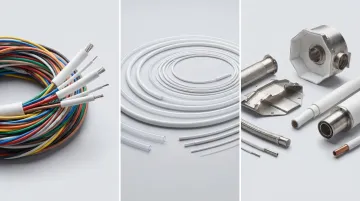
- Wire and cable insulation — a major application category, valued for electrical properties and thermal stability
- Medical devices — FDA 510(k) K991683 describes the ePTFE GORE-TEX vascular graft as intended for vascular replacement or bypass; catheter coatings use similar chemistry
- Aerospace components — thermal covers and structural components requiring chemical resistance at temperature extremes
- Bearings and gears — self-lubricating PTFE-lined components reduce maintenance requirements in machinery
PTFE in Rotational Molding
PTFE release coatings serve a specific function in rotational molding: they allow formed polyethylene parts to separate cleanly from the mold interior without tearing, distortion, or surface defects.
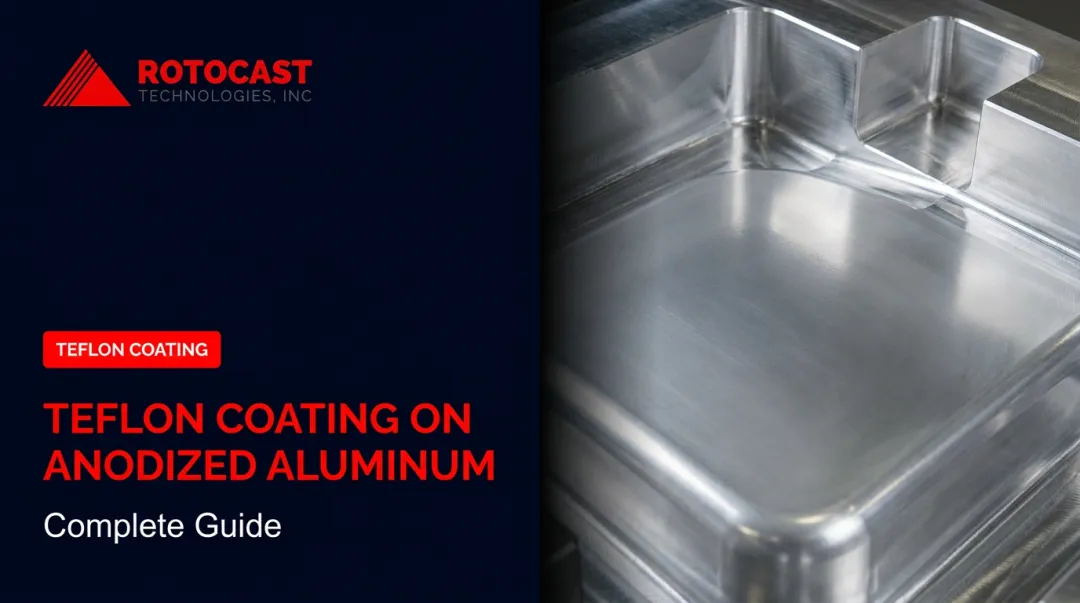
The mold substrate matters enormously here. PTFE coatings adhere and perform consistently only when the underlying surface is uniform and defect-free. This is why surface quality in casting isn't just an aesthetic concern — it directly determines how evenly the coating bonds and how long it performs across production runs.
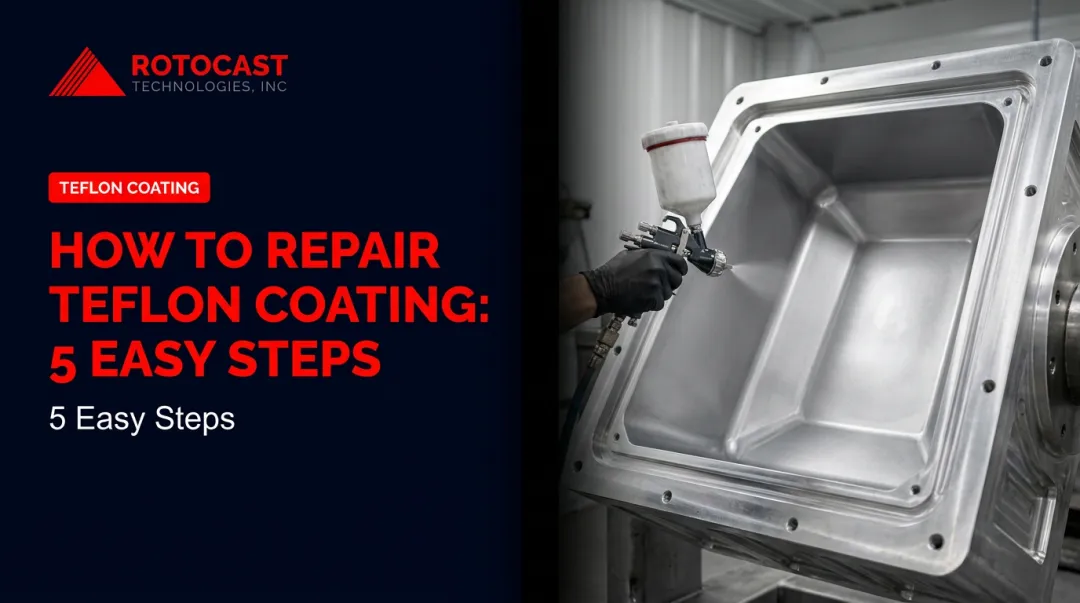
Rotocast Technologies, an Akron, Ohio-based aluminum rotational mold manufacturer operating since 1956, offers Teflon coating as a finishing option on its cast molds. Their thin-walled castings — typically ¼" to 3/8" wall thickness — produce dense, defect-free aluminum interiors that serve as consistent substrates for PTFE coating.
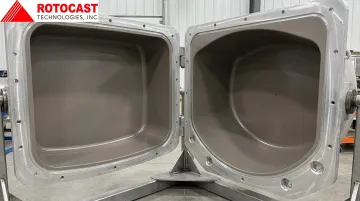
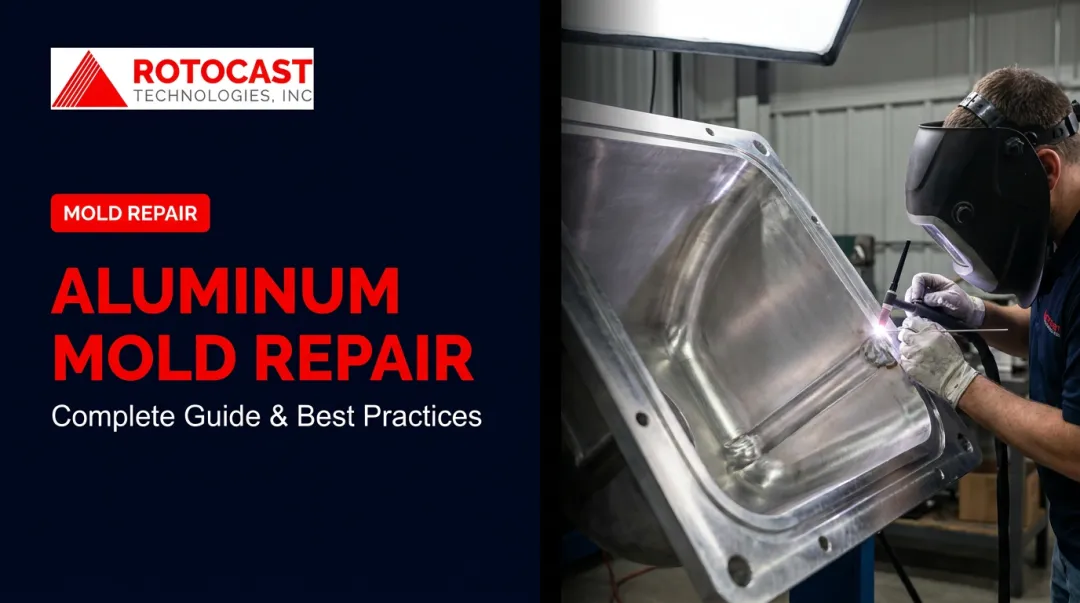
PTFE coating is also available as part of mold repair and refurbishment services when existing coatings need renewal.
Large-Scale Architectural Use
The Metrodome's original PTFE-coated fiberglass roof covered approximately 10 acres when installed in 1982. After the 2010 collapse, Birdair replaced it using more than 700,000 sq ft of PTFE fiberglass membrane — a roof that had performed for nearly three decades through Minnesota winters before a single catastrophic snow event brought it down.
PTFE, PFAS, and the Regulatory Outlook
The regulatory environment around PTFE's manufacturing chemistry has tightened significantly, while finished PTFE products themselves are not affected.
Key regulatory actions:
- April 17, 2024: EPA designated PFOA and PFOS as CERCLA hazardous substances, triggering Superfund-level liability for contamination
- January 8, 2024: EPA finalized a rule blocking restart of 329 inactive PFAS chemicals without full risk review
- EU: ECHA's broad PFAS restriction proposal remains under committee evaluation — no final adoption as of current sources
These actions target manufacturing-side PFAS use, emissions, and contamination — not finished PTFE articles in consumer or industrial products. For manufacturers, compliance risk centers on supply chain inputs, emissions reporting, and waste handling.
The GenX issue deserves specific attention. Chemours adopted GenX (HFPO-DA) as its replacement for PFOA in PTFE production. The EPA has since identified GenX chemicals as PFAS of concern and documented contamination of drinking water near the Fayetteville Works facility.
This "regrettable substitute" pattern — trading one problematic processing chemical for another that raises similar concerns — shows that regulatory scrutiny of PTFE production chemistry is still ongoing, even as the finished polymer remains widely considered safe.
Given that this regulatory picture continues to evolve, rotational mold manufacturers and molders should audit PFAS-related supply chain declarations now, before broader reporting requirements take effect.
Frequently Asked Questions
What is PTFE coating?
PTFE (polytetrafluoroethylene) is a synthetic fluoropolymer with extremely low friction and near-total chemical inertness. Applied as a coating, it creates non-stick, corrosion-resistant, heat-stable surfaces used across cookware, industrial molds, medical devices, and electronics.
Is PTFE coating the same as Teflon?
Teflon is a brand name owned by Chemours for PTFE-based products — so all Teflon is PTFE, but PTFE is manufactured and sold under many other trade names. The chemistry is identical; only the branding differs.
Is PTFE coating safe for human health?
PTFE itself is non-toxic and biologically inert at normal use temperatures below 500°F/260°C. Overheating can cause temporary flu-like symptoms, but the historical cancer concern involved PFOA — a manufacturing aid phased out by 2013 — not PTFE itself.
Is PTFE banned or regulated in the US and Europe?
Finished PTFE products are not banned. However, PFOA and PFOS used in historical manufacturing are now designated CERCLA hazardous substances under EPA's April 2024 ruling. Broad PFAS production restrictions are under development in the EU, targeting manufacturing chemistry rather than finished polymer articles.
Is PTFE part of PFAS, and is that a health concern?
PTFE is technically classified within the PFAS family due to its carbon-fluorine structure. But it's a large, stable solid polymer that doesn't dissolve or bioaccumulate — unlike the small, mobile PFAS compounds (PFOA, PFOS) that drive health concerns.
Which is safer: PTFE or ceramic non-stick?
Both are considered safe when used correctly. Ceramic is PFAS-free and tolerates slightly higher surface temperatures; PTFE delivers more durable non-stick performance over time. The better choice depends on your priorities around chemical exposure and durability.