What are custom aluminum thin-walled castings used for?
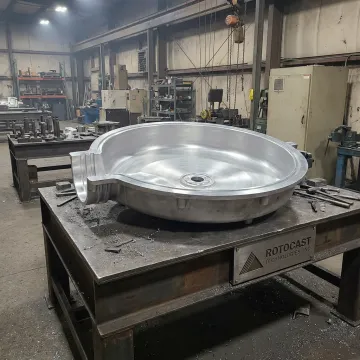
Custom aluminum thin-walled castings are used where manufacturers need lightweight yet durable components with precise geometry and high-quality surfaces. They are especially valuable for OEM parts, tooling, and rotational molding applications because uniform wall thickness supports better heat transfer, dimensional consistency, and dependable production performance over repeated cycles.
What wall thickness is typical for thin-walled aluminum castings?
At Rotocast Technologies, thin-walled castings for these applications are typically produced in the 1/4-inch to 3/8-inch wall thickness range. That range helps balance structural integrity, casting quality, and thermal performance. Maintaining consistent wall thickness is important because it affects part durability, surface quality, and how efficiently the casting performs in production environments.
Can you help with design and pattern development for OEM cast parts?
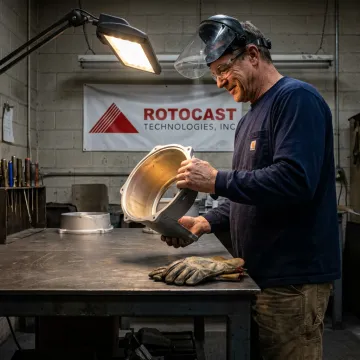
Yes. Rotocast Technologies supports projects starting from customer drawings or electronic files and provides engineering and pattern development assistance. The team evaluates wall thickness, parting line layout, shutoff, and production features to create efficient, manufacturable designs. Veteran pattern makers and foundry personnel work together to improve tool life and casting performance before production begins.
What makes surface quality important in aluminum castings?
Surface quality matters because the finished molded or cast product often reflects the condition of the tooling or casting surface. For rotational molding applications especially, the outside of the molded product mirrors the mold interior. High-surface quality castings help improve appearance, reduce finishing issues, and support more consistent production results across repeated manufacturing runs.
Do you offer finishing options for cast aluminum parts and molds?
Yes. Rotocast Technologies offers multiple finishing options, including hand polishing, shot peened and sandblasted textures, acid etching, polished surfaces, Teflon coatings, and other specialty coatings. These finishing services help tailor the casting or mold surface to production requirements, appearance goals, release characteristics, and long-term durability in demanding manufacturing environments.
Can existing molds or cast tooling be repaired or modified?
Yes. Rotocast Technologies provides mold repair, rebuilding, refurbishment, and modification services through its machine shop capabilities. These services can restore worn tooling, correct damage, or adapt existing molds to updated production needs. Repairing or modifying tooling can extend service life, improve output, and reduce the cost of full replacement when the base tool remains viable.
What industries does Rotocast Technologies serve with these castings?
Rotocast Technologies primarily serves rotational molders, industrial manufacturers, and product manufacturers that rely on rotational molding processes. Its capabilities are especially suited to OEM customers needing specialized aluminum castings, production tooling, and related support services. The company’s experience with intricate shapes and thin-walled designs makes it a fit for demanding industrial manufacturing applications.
Why work with an in-house foundry for custom castings?
An in-house foundry gives manufacturers better control over casting quality, process consistency, and communication throughout the project. Rotocast Technologies uses its in-house foundry to produce intricate thin-walled aluminum castings while coordinating closely with pattern making, engineering, machining, and finishing teams. That integrated approach helps reduce errors, improve responsiveness, and support reliable production outcomes.